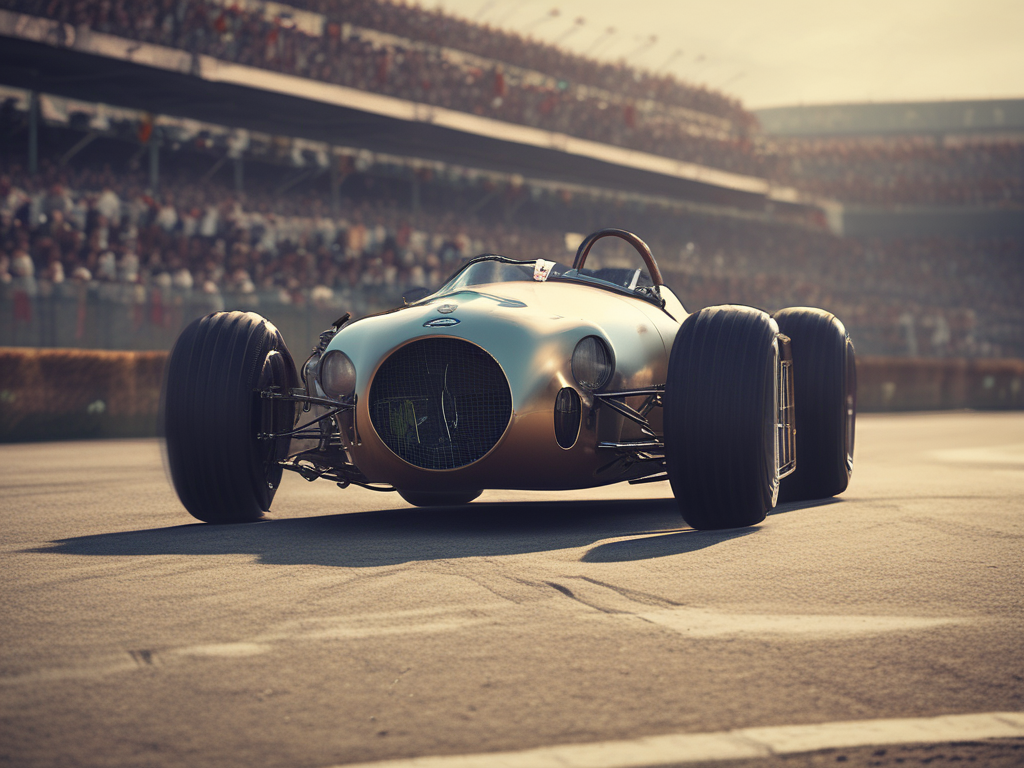
The 24 Hours of Le Mans, held annually near the town of Le Mans, France, stands as one of the most prestigious and challenging motorsport events in the world. Since its inception in 1923, the race has become a symbol of endurance, innovation, and the relentless pursuit of excellence. Over nine decades later, it continues to captivate the imagination of racing enthusiasts and the general public alike. But what makes this race so well-respected and revered? The answer lies in its rich history, legendary matchups, and the stories of triumph and tragedy that have defined it.
A Brief Historical Overview
The 24 Hours of Le Mans was conceived by the Automobile Club de l’Ouest (ACO) as a test of automotive endurance and reliability. Unlike traditional races, Le Mans challenges drivers and manufacturers to cover the greatest distance in 24 hours, navigating a mix of closed public roads and dedicated racing circuits.
The Early Years: Pioneering Spirit
The inaugural race in 1923 set the stage for what would become an enduring legacy. Drivers André Lagache and René Léonard, piloting a Chenard-Walcker, won the first race, covering over 2,200 kilometers. The early years were marked by a spirit of innovation, with manufacturers experimenting with new technologies and engineering solutions to enhance performance and durability.
Legendary Matchups and Stories
The Ford vs. Ferrari Rivalry (1960s)
One of the most iconic periods in Le Mans history was the fierce rivalry between Ford and Ferrari in the 1960s. After Ferrari dominated the early part of the decade, Henry Ford II set out to build a car that could defeat the Italian powerhouse. This led to the development of the Ford GT40, a car that would become legendary in motorsport history.
The 1966 race was particularly memorable. Ford entered three GT40s, and despite numerous challenges, they achieved a historic 1-2-3 finish, ending Ferrari’s reign and establishing the GT40 as a symbol of American engineering prowess. This victory was dramatized in the 2019 film “Ford v Ferrari,” bringing the story to a new generation of fans.
The Porsche Dominance (1970s-1980s)
Porsche’s legacy at Le Mans is unparalleled, with a record 19 overall victories. The 1970s and 1980s were particularly dominant for the German manufacturer. The Porsche 917, driven by legends like Jacky Ickx, secured multiple victories, including a dramatic win in 1970 that was immortalized in the film “Le Mans” starring Steve McQueen.
The 1982 race saw the debut of the Porsche 956, which went on to dominate Le Mans for several years. In 1983, the 956 secured a 1-2-3 finish, and Stefan Bellof set a lap record on the Nürburgring Nordschleife that still stands today.
The Modern Era: Audi’s Technological Marvels (2000s)
The turn of the millennium saw Audi emerge as the dominant force at Le Mans. With the introduction of the R8 in 2000, Audi began a winning streak that highlighted their technological superiority. The R8, known for its reliability and speed, won five of the six races between 2000 and 2005.
Audi continued to innovate with the R10 TDI, the first diesel-powered car to win Le Mans in 2006. This victory was a testament to the brand’s commitment to pushing the boundaries of automotive technology. Audi’s dominance continued into the hybrid era, with the R18 e-tron quattro securing multiple wins in the 2010s.
The Spirit of Innovation
One of the defining characteristics of Le Mans is its role as a proving ground for automotive innovation. Over the years, the race has seen the introduction of numerous groundbreaking technologies, including advancements in aerodynamics, materials science, and alternative powertrains. The race has driven the development of disc brakes, turbocharging, and hybrid technology, many of which have filtered down to consumer vehicles.
Stories of Triumph and Tragedy
Le Mans is not just a story of technological triumphs but also of human endurance and resilience. The race has seen its share of tragedies, most notably the 1955 disaster when Pierre Levegh’s car crashed into the crowd, resulting in the deaths of 83 spectators. This event led to significant safety reforms in motorsport.
Conversely, Le Mans has been the stage for some of the most inspirational stories in racing. In 1971, the film “Le Mans” captured the essence of the race, highlighting its grueling nature and the camaraderie among drivers. The 1991 victory by Mazda, with their rotary-engine 787B, remains a standout moment as the only win by a Japanese manufacturer and a non-piston engine car.
Final Thought
The 24 Hours of Le Mans remains a revered institution in motorsport, 92 years after the first race. Its blend of tradition, innovation, and human drama continues to captivate audiences worldwide. From legendary rivalries to technological breakthroughs and stories of human perseverance, Le Mans is more than just a race—it is a celebration of what can be achieved when man and machine are pushed to their limits. As we look to the future, Le Mans will undoubtedly continue to inspire and challenge, maintaining its status as one of the most respected and iconic events in the world of motorsport.